
If walking down stairs makes you wince, hesitate, or grip the railing a little tighter—you’re not imagining it.
And it’s not just aging. It’s a problem with a fix.
Make Your Knees Stop Screaming on the Way Down
You’re not just stepping down. You’re catching a fall.
Every step down is your body hitting the brakes—and if your knees aren’t strong enough to take the hit, they’ll let you know loud and clear.
“I didn’t realize how much I was avoiding stairs… until I stopped hurting.”
— nearly every client I’ve ever trained over 50
The Hidden Impact of Walking Down Stairs
Going up stairs takes effort—but going down? That takes control.
Each step down is a controlled fall — and your knees are the brakes absorbing all that force.
They can take on 6 to 12 times your body weight in pressure just to slow you down and prep for the next step.
That’s not soreness. That’s biomechanics slapping you in the face.
Why Generic Workouts Won’t Fix This
Think bootcamps and HIIT will fix this? Think again.
Those workouts weren’t built for people over 50 dealing with cranky knees—they were built to exhaust college kids with too much caffeine.
What you really need is a smarter way to train the muscles your body relies on to stay upright, stable, and confident—especially on a staircase with no handrail in sight.
5 Step-Up Variations That Actually Work
I’ve used these with clients in their 50s, 60s—even their 70s—who now walk down stairs, hike hills, and move pain-free.
1. Step-Up with Band Resistance
What to do: Anchor a resistance band behind you and around your working thigh. Drive through your front leg to step up while keeping tension on the band.
What not to do: Don’t let the band collapse your knee inward. Control the motion—don’t let the band do the work for you.
2. Step-Up with Dumbbells
What to do: Hold dumbbells by your sides and step up under control, focusing on using your front leg—not pushing off the back one.
What not to do: Avoid leaning forward or “bouncing” off your back leg.
3. Step-Up with a Single Dumbbell
What to do: Hold one dumbbell in the opposite hand of your working leg. This adds a core and stability challenge.
What not to do: Don’t collapse toward the weight. Keep your torso upright and braced.
4. Step-Up with Goblet Hold
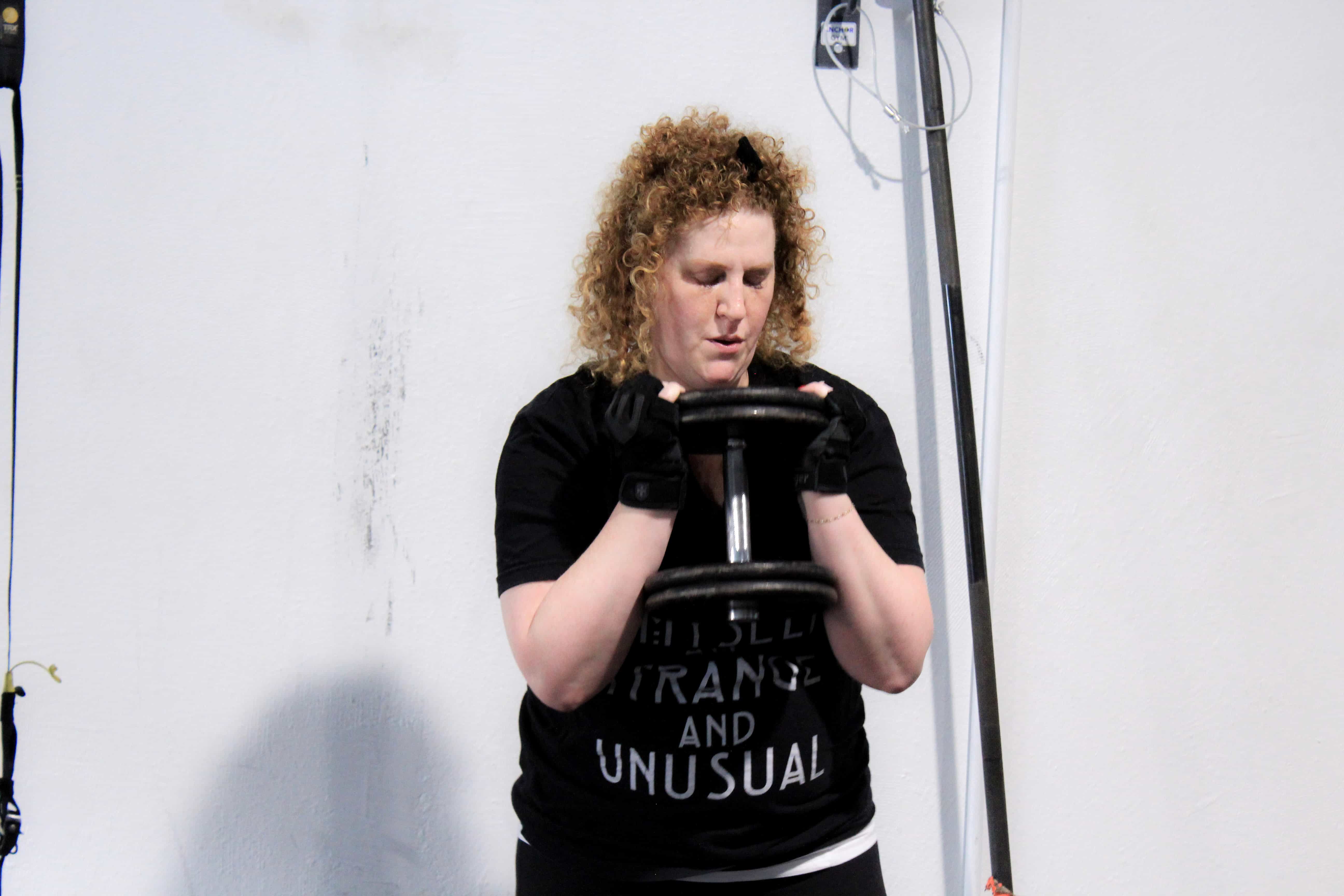
What to do: Hold a dumbbell or kettlebell at your chest and step up slowly. Keep your chest tall and elbows tucked.
What not to do: Don’t flare your elbows or round your spine. Keep the weight close to your body.
5. Step-Up with Kettlebell in Racked Position
What to do: Hold a kettlebell in the rack position on one side. Keep your core engaged and elbow tucked.
What not to do: Don’t let the weight pull you off balance. Stay centered and stable.
Why This Isn’t Just About Stairs
You don’t talk about it—but you feel it.
The hesitation at the top of the stairs.
The slow shuffle down a curb.
That quiet voice saying, “Take the elevator.”
This isn’t about “just getting stronger.”
It’s about getting your life back—one stair at a time.
The people I train in Central Austin don’t care about PRs or six-packs.
They want to hike again, carry groceries without wincing, and move like someone 15 years younger.
And that’s exactly what we train for.
Real Results from Real Clients
“I’ve had knee pain for 20 years, and Nate is by far the best personal trainer I’ve had in Austin. He actually geeks out on movement and proper breathing—which I love, because I immediately feel the difference.”
— Vielca
Read more reviews

Stairs Shouldn’t Hurt—Here’s How to Fix That
If going downstairs feels like a challenge—or worse, a hazard—it’s time for a smarter approach. At Stowe Personal Training in Central Austin, we help adults 50+ rebuild the strength, balance, and control to make stairs easy again. Let’s get you back on stable footing.
Want more pain-free strategies? These posts go deeper:
-
Why Stretching Isn’t Helping
→ Learn how to target mobility where you need it—without making things worse. -
Starting Where You Are – No Matter What
→ Joint pain doesn’t mean giving up. It means being smarter with your plan. -
Why Most Workout Plans Fail People Over 50
→ Random exercises won’t fix your knees—structured training will.

“Nate is definitely the best personal trainer in Austin, Texas. I’m stronger. We’ve worked through unrelated pain to keep me training. And most importantly, I don’t dread coming three times a week. I actually look forward to it. This was the best decision for me!”
— Koreen Jones 5- Star Google Review

Written by Nate Stowe, NASM-CPT, NCSF-CPT, CES, TRX Certified
Nate Stowe is a personal trainer and movement specialist based in Austin, Texas, with over 16 years of experience helping adults over 50 move better, get stronger, and live pain-free. He’s the founder of Stowe Personal Training, creator of the GET STRONGER LIVE LONGER Program, and author of Revitalize at 50+, a best-selling book on strength, longevity, and reclaiming your body after middle age.
Over the past two decades, Nate’s training system has helped hundreds of everyday adults avoid surgery, reduce chronic pain, and get back to doing the things they love—without needing a medical degree or spending hours in the gym.
Don’t worry—he saves the third-person talk for bios, not your training sessions. Sixteen years in, he’s still awkward when writing about himself.

Leave a Reply